


Quantum Logbook
GL Logistics
Choosing an electronic logging device is less about finding the longest feature list and more about finding a workflow you can repeat correctly at the end of a tiring driving day. I approached Quantum Logbook with that in mind. It is a free Auto & Vehicles app from GL Logistics, built around electronic logs for truckers, vehicle inspection reporting, fuel-tax records, and hours-of-service compliance. My first impression is that it aims to be a practical work tool rather than a general trucking companion packed with unrelated extras.
That focus matters. A driver who mainly needs a clear way to maintain duty status, complete DVIR work, and keep IFTA information organized may appreciate the narrower purpose. Someone expecting navigation, load boards, dispatch communication, or a full fleet-management suite should approach it differently. The useful question is not whether Quantum Logbook can replace every trucking app, but whether its compliance-centered workflow matches the way you actually work.
How I would decide whether Quantum Logbook fits
Start with the daily routine, not the feature list
The best test is to imagine the moments when the app must be dependable: starting a shift, changing duty status, taking a break, completing a vehicle inspection, recording fuel information, and reviewing the day before signing off. If those tasks are the main reason you need an ELD, Quantum Logbook has a sensible starting point. Its store summary identifies it as an FMCSA-certified ELD, and the app brings logs, DVIR, IFTA, and HOS compliance into one place.
I would also consider who is entering the information. An owner-operator who handles driving and paperwork alone may value a straightforward mobile workflow. A larger operation with complicated dispatch, multiple administrative roles, or deep reporting requirements may need a broader platform. Quantum Logbook can be part of that setup, but I would not assume that a focused logbook automatically replaces every back-office system.
Another decision point is device compatibility. The current version is 2.3.2 and requires Android 8.0 or later. That is a reasonable baseline for many phones, but drivers using an older dedicated device should check the operating system before planning a switch. The app is rated for Everyone, which makes it approachable from an age-rating perspective, although the real learning curve comes from compliance procedures rather than the content rating.
Related News

Why WhatsApp Messenger Still Makes Everyday Communication Feel Easy

Jurassic World: The Game Is the Better Dino Tycoon for Strategic Players

Threads in Real Life: Who Should Join, Lurk, or Leave

How SHEIN Turned Shopping Into an Endless Content Feed

How to Make Fortnite Feel Smarter on Mobile

Should You Switch to Microsoft Outlook on Mobile?
What I look for in an ELD workflow
I want the app to reduce avoidable mistakes without encouraging me to rush through important entries. A good logbook should make a status change easy to recognize, keep inspection work separate from driving records, and make fuel-tax information available when it is needed later. The value is not just in recording data; it is in making the record understandable when I review it after a long route.
That is why the combination of HOS, DVIR, and IFTA is more meaningful than any one item alone. These tasks are connected in real life, but they are not the same task. Treating them as separate checkpoints helps me avoid the common habit of remembering compliance work only when paperwork is already overdue.
The practical questions I would answer before switching
Would I use it for a single truck or a more involved operation? Does my current process depend on navigation, dispatch, or accounting tools that this app is not intended to replace? Can I keep my phone charged and available during the workday? Am I willing to learn a new sequence for logging, inspection, and review? These questions are more useful than simply asking whether the app is free.
Gallery
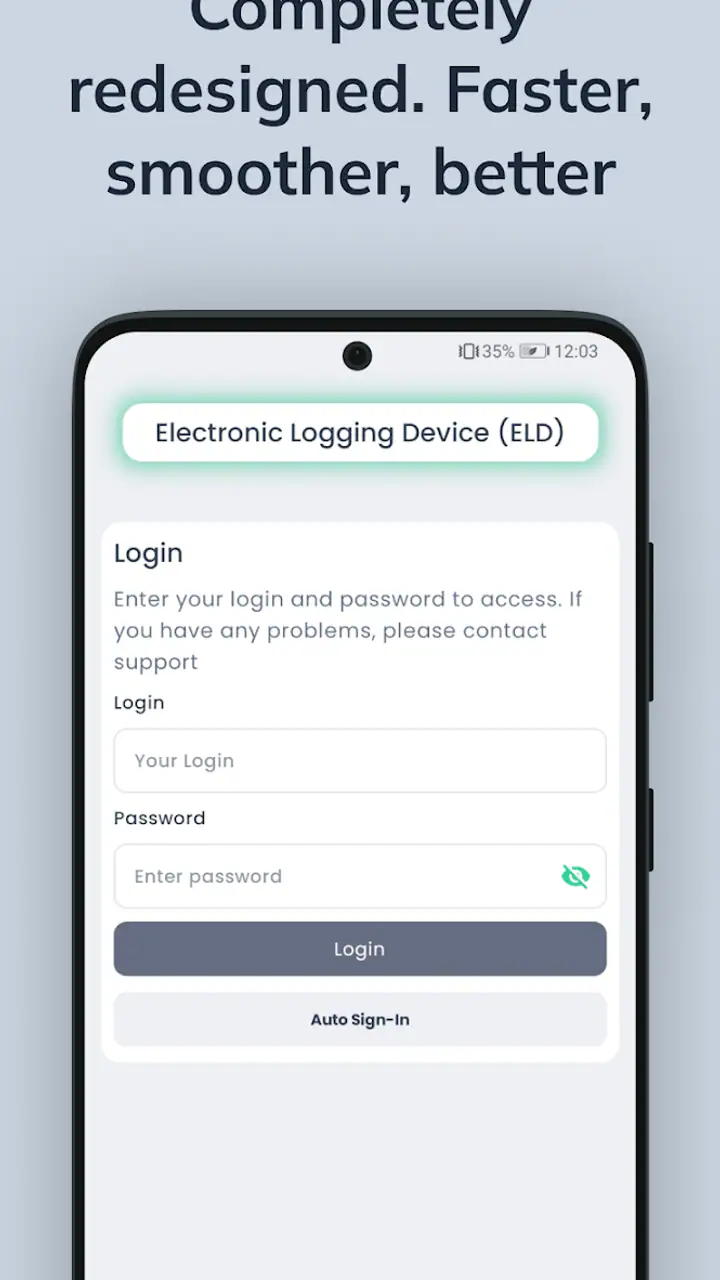
Quantum Logbook costs nothing to download, which removes an obvious barrier to trying it. Still, switching has a time cost. I would set it up before an important trip, walk through the daily sequence while parked, and make sure I understand how I will handle inspections and fuel records. Free software can still be expensive in practice if it creates confusion during a roadside inspection or forces duplicate paperwork.
Where the app wins in everyday trucking work
A focused home for logs and compliance tasks
The strongest part of Quantum Logbook is its concentration on the records a trucker repeatedly needs. Instead of treating electronic logs as one small feature inside a much larger transport platform, it presents the logbook as the center of the experience. For a driver who wants fewer unrelated screens, that focus can make the app easier to adopt.
I especially like the idea of separating the routine into deliberate stages. I can think of the day as a sequence: confirm the current duty status, keep the log accurate while working, complete a vehicle inspection, and preserve fuel information for later reporting. That mental model is simple, but it is useful because compliance failures often come from small omissions rather than from a lack of knowledge.
DVIR is more than a box to tick
Vehicle inspection reporting deserves its own attention. In a rushed workflow, a driver may think of DVIR as an administrative interruption. I would use it instead as a repeatable handoff between the condition of the truck and the written record. Recording an issue promptly gives me a clearer trail than trying to reconstruct the condition of the vehicle hours later.
A practical habit is to complete the inspection at the same point in the routine every day, rather than waiting for a convenient moment. For example, I would do it while parked before beginning the route and repeat the relevant check when finishing. That consistency is one of the less obvious benefits of having DVIR inside the same app as the logbook: I am less likely to treat inspection reporting as a separate task that can be forgotten.
The trade-off is that a digital form can make users feel finished before they have actually inspected anything. Quantum Logbook cannot replace a careful walk-around. I would use the app to document the inspection, not as a substitute for looking at tires, lights, connections, and other physical details.
IFTA records become easier to maintain when captured at the right time
Fuel-tax reporting is another area where timing matters. The useful workflow is to record information when the receipt and fuel stop are still fresh, not at the end of a week when several stops blend together. With IFTA included alongside the logbook, I can build the habit of entering fuel details immediately after parking safely.
This is a concrete advantage for drivers who currently keep scattered notes, photograph receipts, and later try to reconcile everything from memory. The app does not eliminate the need for accurate entries, but it gives those entries a dedicated place. I would still keep receipts according to my normal business process and compare them with the records before filing anything important.
One subtle trade-off is that combining these tasks can either simplify the day or make the app feel busy. If I only need logs and rarely deal with fuel reporting, the IFTA area may feel like extra navigation. If I regularly cross jurisdictions, having the function close to the daily record is more valuable.
Compliance awareness without pretending the app is the whole operation
The FMCSA-certified ELD positioning gives Quantum Logbook a clear purpose: support compliant electronic logging rather than merely act as a personal mileage diary. That distinction matters to professional drivers. I would still treat the app as one part of a compliant process, because correct results depend on honest entries, proper use, current rules, and the driver’s attention.
My preferred habit would be to review the log before ending the shift instead of waiting until a problem appears. I would look for an unexpected status, a missing transition, or a period that does not match what actually happened. That review takes less effort when it is part of the routine, and it is more useful than discovering an inconsistency after the day has already been closed.
A realistic day with the app
Imagine I am driving a regional route with several stops. Before moving, I check my duty status and complete the vehicle inspection while parked. During the route, I update the log as my work changes rather than trying to remember every transition later. At a fuel stop, I save the relevant information before leaving the station. At the end of the day, I review the record and confirm that the inspection and fuel entries are not left for tomorrow.
That scenario shows where Quantum Logbook can help: it places the compliance tasks near the moments when they happen. The app is not making the route shorter or the paperwork disappear. It is giving me a repeatable place to put the information, which can be enough to improve consistency for an independent driver.
What its adoption numbers suggest, without overreading them
Quantum Logbook has passed 10K+ installs and holds a 4.3 average from 89 ratings, with 13 written reviews. I see that as a sign of real interest and generally positive reception, but not as proof that it suits every fleet or every driving style. A smaller review pool can offer useful clues while still leaving important edge cases unexplored.
For me, the more important signal is whether the workflow fits my specific routine. I would use the free availability to test that fit in a controlled way, rather than choosing it solely because the rating looks good.
Where the usual alternatives may fit better
The first alternative is a broader all-in-one trucking platform. These products often appeal to operators who want logs, dispatch, navigation, vehicle data, communication, and management reporting tied together. If I need those areas connected every day, a specialized logbook may leave me moving between apps. In that case, the broader system could be worth the added complexity, even if I prefer Quantum Logbook’s narrower focus.
The second alternative is a fleet-oriented solution designed around supervisors and multiple vehicles. A fleet manager may care more about centralized oversight, driver administration, and operational reporting than about having a simple personal logbook. Quantum Logbook makes more sense when the driver’s own compliance workflow is the priority. I would be cautious about selecting it as the sole system for a complicated organization without first testing the administrative side in real conditions.
The third alternative is a paper log or a basic mileage tool. Paper can feel familiar, and a mileage app may be enough for someone who does not need an ELD-centered process. For professional truckers subject to electronic logging requirements, however, those options do not serve the same purpose. Quantum Logbook’s value comes precisely from bringing HOS and related compliance work into a digital record.
Navigation apps are a different category altogether. I would not choose Quantum Logbook expecting route guidance, traffic intelligence, or fuel-price discovery. I would pair a dedicated logbook with the navigation tool I already trust if those functions matter. The advantage of that separation is specialization; the disadvantage is that I must manage more than one app and keep the information consistent.
The cost of switching is mostly operational
Because the app is free, the financial risk of trying it is low. The real cost is learning the workflow and changing habits that may already be automatic. I would not switch in the middle of a demanding trip. I would first install the app on a compatible Android device, explore the log and inspection sequence while stationary, and decide exactly when fuel information will be entered.
I would also plan a short overlap with my existing process. That does not mean duplicating every entry forever. It means comparing the results long enough to catch misunderstandings before relying on the new workflow completely. If I discover that I still need my old system for dispatch, navigation, or management reports, I would define which app owns each task so that I do not create two conflicting records.
The most important switching tip is to protect the end-of-day review. New users often concentrate on starting a shift and forget the closing routine. I would make the final check part of the transition plan: review duty status, confirm inspection work, verify fuel entries, and resolve anything that does not match the day. That habit will tell me more about the app’s suitability than a quick glance at its interface.
Who should choose it, and who should skip it?
I would recommend Quantum Logbook to an independent trucker or small operator who wants a free, focused Android tool for electronic logs, DVIR, IFTA, and HOS compliance. It is especially appealing if the current process involves scattered notes or separate reminders and the goal is to bring the essential records together without adopting a large business platform.
I would also consider it for a driver who prefers a dedicated compliance app alongside separate navigation or dispatch tools. That setup is not as unified as an all-in-one platform, but it can be easier to understand because each app has a clear job.
I would skip it if my main requirement is a complete fleet-management environment, integrated dispatch, or a single application for every transport operation. I would also hesitate if I use an older Android device below the required operating-system level or if I am unwilling to change my current record-keeping habits. A free app is not automatically the right tool when the surrounding workflow is more complex than the app’s focused purpose.
My recommendation after weighing the trade-offs
My recommendation is to try Quantum Logbook when compliance records are the center of the problem. The combination of electronic logs, DVIR, IFTA, and HOS support gives it a clear identity, and the free price makes a careful trial practical. I like it most as a disciplined daily logbook for a driver who wants a compact tool rather than a complete transport-management suite.
I would not describe it as a universal replacement for every trucking app. Its strength is also its boundary: it concentrates on records and compliance, so drivers needing navigation, dispatch, or deep fleet administration may be better served by a broader alternative or a combination of tools. That is not a flaw if the focused approach matches the job.
After using it, I would keep the decision simple: test the complete routine while parked, use it through an ordinary workday, and inspect the final records before trusting it on more demanding routes. If the app makes those repeated tasks clearer and reduces the temptation to reconstruct details later, it has earned a place in the workflow. For the right trucker, Quantum Logbook is a practical compliance companion, not a bloated all-purpose platform.
GL Logistics has given the app a clear direction, and the current version continues that focused approach. With its Everyone content rating, Android 8.0 minimum, and no download charge, it is accessible to many drivers who want to evaluate it for themselves. My final view is positive but conditional: choose it for organized electronic logging and related records, and choose something else when your operation needs a much wider set of transport tools.
FAQs for Quantum Logbook
What is Quantum Logbook and what can I use it for?
Quantum Logbook is designed as a digital record-keeping tool for organizing and managing logbook entries. It may be useful for documenting activities, observations, experiments, maintenance notes, or other recurring records in one place. Before downloading, users should check the app’s current description and screenshots to confirm that its features match their specific workflow and that it supports the type of information they want to record.
Is Quantum Logbook suitable for beginners?
The app appears intended for users who want a structured way to create and review logbook records, but the overall learning experience can depend on how detailed their documentation needs to be. Beginners should be able to start with basic entries and explore additional options gradually. If you require advanced reporting, specialized templates, or professional compliance features, review the available tools carefully before relying on it for important records.
Does Quantum Logbook work offline?
Offline availability is an important consideration for any logbook application, particularly when entries must be made in locations with weak or unavailable internet access. Users should verify the latest store listing or in-app documentation to determine whether Quantum Logbook allows entries to be created, edited, and viewed without a connection, and whether synchronization occurs automatically once the device is online again.
Can I back up or export my Quantum Logbook entries?
Before using Quantum Logbook for valuable or long-term records, it is worth checking how your information is protected and whether entries can be backed up or exported. Look for details about cloud synchronization, file export formats, account recovery, and device transfer. These options can be especially important if you change phones, reinstall the app, or need to share records with another person or service.
Is Quantum Logbook free to download, and are there in-app purchases?
The download price and available features may vary between Android and iOS, and some versions of an app can include advertising, subscriptions, or optional purchases. Check the official Google Play or App Store listing before installing Quantum Logbook for the most accurate information. Pay particular attention to subscription terms, trial periods, and whether essential logbook functions are restricted to a paid plan.
Pros
- Works offline
- making it useful in remote areas or during travel.
- Supports quick entries for recording observations without lengthy setup.
- Clear log organization helps keep related quantum notes easy to find.
- Useful for students
- hobbyists
- and researchers tracking experiments.
- Lightweight design should run smoothly on most modern mobile devices.
Cons
- May feel too specialized for users unfamiliar with quantum terminology.
- Advanced analysis and visualization tools may be limited.
- Manual data entry can become time-consuming for large experiments.
- Export and sharing options may not cover every preferred file format.
- Some features may require extra setup before they fit a personal workflow.


